



Sep . 15, 2025 08:00 Back to list
Probiotics with Bacillus Subtilis Factory | Premium Quality Manufacturer
Introduction to Advanced Probiotic Manufacturing
The demand for high-quality microbial solutions across various industries—from human nutraceuticals to animal feed and agriculture—continues its exponential growth. At the forefront of this biological revolution is the production of robust and efficacious probiotics, with probiotics with bacillus subtilis factory operations setting new benchmarks for purity, viability, and strain specificity. This detailed article explores the intricate world of Bacillus subtilis production, emphasizing the technical depth, strategic advantages, and customized solutions offered by leading manufacturers.
As a resilient, spore-forming bacterium, Bacillus subtilis offers significant advantages over other probiotic strains, primarily due to its stability under harsh conditions and broad-spectrum benefits. Understanding the full scope of a modern probiotics with bacillus subtilis factory is crucial for B2B decision-makers seeking reliable and advanced microbial ingredients for their product lines.
Industry Trends in Probiotic Production
The global probiotics market, valued at approximately USD 61.1 billion in 2023, is projected to reach USD 100.3 billion by 2030, driven by increasing consumer awareness of gut health and demand for natural health solutions. Key trends influencing the probiotics with bacillus subtilis manufacturer landscape include:
- Advanced Strain Selection and Engineering: Focus on identifying and developing specific Bacillus subtilis strains with enhanced functional properties, such as improved enzyme production, antimicrobial activity, or immune modulation.
- Microencapsulation Technologies: Innovations in encapsulation techniques to improve the survival rate of probiotic spores through manufacturing processes and gastrointestinal transit, ensuring higher CFU delivery.
- Sustainable and Bioprocess Optimization: Development of more energy-efficient fermentation processes, waste reduction, and utilization of sustainable raw materials, aligning with broader ESG (Environmental, Social, and Governance) goals.
- Regulatory Harmonization and Quality Assurance: Increasing demand for products compliant with international standards like ISO, GMP, and FDA, necessitating stringent quality control at every stage from a reliable probiotics with bacillus subtilis supplier.
- Application Diversification: Expansion into non-traditional sectors such as bioremediation, plant growth promotion, and industrial enzyme production, showcasing the versatility of Bacillus subtilis.
These trends highlight a market moving towards greater scientific rigor, technological sophistication, and a broader application base for microbial solutions.
Manufacturing Process: From Culture to Commercial Product
The production of Bacillus subtilis probiotics in a specialized probiotics with bacillus subtilis factory involves a meticulously controlled, multi-stage bioprocess designed to ensure high cell density, viability, and purity. Below is a detailed process flow:
1. Strain Selection and Inoculum Preparation
Materials: Authenticated, high-purity Bacillus subtilis master cell bank (e.g., ATCC 6051). Strict adherence to genetic stability and desired functional properties.
Process: Revival of lyophilized cultures from the master cell bank under aseptic conditions. Initial propagation in shake flasks with rich, sterile nutrient media (e.g., Luria-Bertani broth with specific carbon and nitrogen sources) to generate sufficient biomass for larger-scale inoculation.
Testing Standards: Genetic sequencing for strain identity verification, viability assays (CFU/mL), absence of contaminants.
2. Fermentation
Materials: Sterilized fermentation media containing glucose, peptone, yeast extract, and essential minerals optimized for Bacillus subtilis growth and sporulation.
Process: The prepared inoculum is transferred to large-scale bioreactors (e.g., 10,000L – 50,000L stainless steel tanks). Fermentation is precisely controlled for parameters such as temperature (typically 30-37°C), pH (6.0-7.5), dissolved oxygen levels, and agitation speed. This stage focuses on maximizing biomass and inducing efficient sporulation. Modern bioreactors often employ advanced sensors and SCADA systems for real-time monitoring and control.
Testing Standards: In-process CFU/mL measurements, pH, DO, nutrient consumption, detection of metabolic byproducts, microscopy for sporulation efficiency. Adherence to GMP guidelines.
3. Harvest and Concentration
Process: Once optimal sporulation is achieved, the fermentation broth containing Bacillus subtilis spores is harvested. This typically involves centrifugation or membrane filtration (e.g., tangential flow filtration) to separate the spores from the spent media and concentrate the biomass.
Testing Standards: Spore concentration (CFU/g), purity, removal efficiency of residual media components.
4. Drying and Formulation
Process: The concentrated spore paste undergoes drying to achieve long-term stability. Common methods include spray drying or fluidized bed drying, chosen to minimize viability loss. Carriers (e.g., maltodextrin, calcium carbonate, corn starch) and cryoprotectants are often added during formulation to further enhance stability and facilitate handling. The dried powder is then milled to a uniform particle size.
Testing Standards: Water activity, moisture content, particle size distribution, CFU/g, purity, absence of pathogens (e.g., coliforms, salmonella), heavy metals, and mycotoxins.
5. Packaging and Quality Control
Process: The finished Bacillus subtilis probiotic powder is packaged in multi-layer aluminum foil bags or sealed container111s under inert gas to protect against moisture and oxygen.
Testing Standards: Final product testing includes viability (CFU/g), stability testing (accelerated and real-time shelf-life studies), purity, and compliance with all relevant international food and feed safety standards (e.g., ISO 22000, FSSC 22000, FDA, EFSA). Full traceability from raw material to finished product is maintained.
Service Life: Typical shelf life for properly stored Bacillus subtilis products ranges from 18 to 24 months, owing to the spore's inherent resistance.
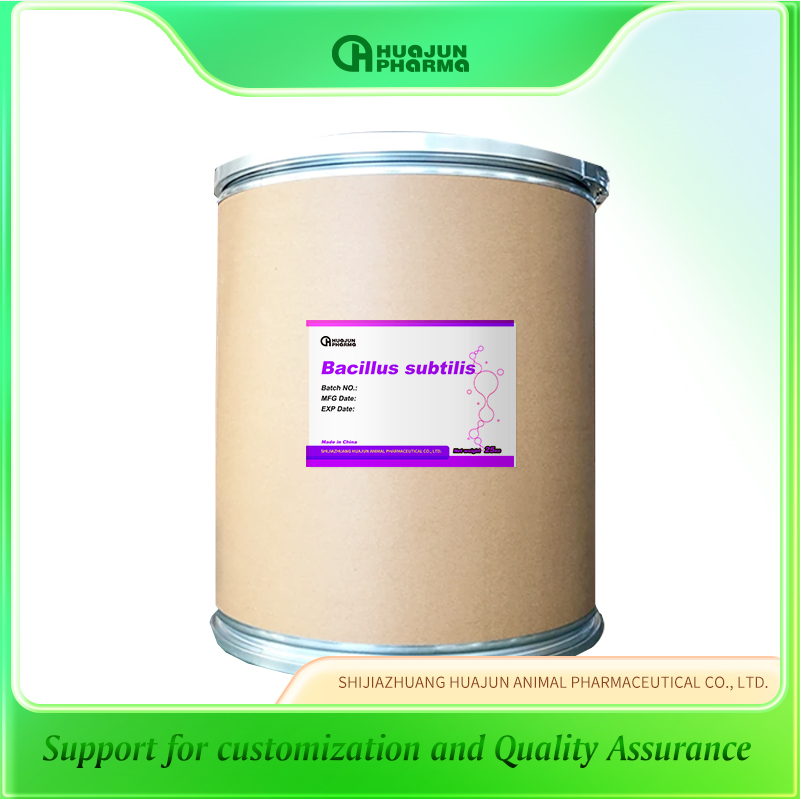
This rigorous process ensures that the product from any reputable probiotics with bacillus subtilis manufacturers consistently meets demanding quality specifications for B2B applications.
Technical Specifications and Parameters
Understanding the technical specifications of Bacillus subtilis products is critical for integration into various formulations. Below is a representative product specification table for a typical industrial-grade Bacillus subtilis concentrate from a leading probiotics with bacillus subtilis supplier:
| Parameter | Specification | Method/Standard |
|---|---|---|
| Active Ingredient | Bacillus subtilis (Specified Strain) | Microbiological Identification |
| Concentration (Viable Cells) | ≥ 1.0 x 10¹¹ CFU/g (Colony Forming Units per gram) | Plate Count Method (USP ) |
| Formulation | Powder | Visual |
| Color | Off-white to light brown | Visual |
| Moisture Content | ≤ 5% | Loss on Drying (AOAC 925.09) |
| Particle Size | 90% | Sieve Analysis |
| pH Stability Range | pH 3.0 - 9.0 | In-vitro testing |
| Temperature Tolerance | Stable up to 80°C (short exposure) | Heat Challenge Test |
| Heavy Metals | Compliant with international food/feed safety standards (e.g., Pb | ICP-MS |
| Pathogens | Absent (e.g., Salmonella, E. coli, Staphylococcus aureus) | Microbiological Culture |
| Storage Conditions | Cool, dry place, away from direct sunlight; sealed packaging. | Manufacturer Recommendation |
| Shelf Life | 24 months from production date | Accelerated/Real-time Stability Studies |
Application Scenarios and Target Industries
The versatility of Bacillus subtilis makes it a preferred choice for various industrial applications. A high-quality product from a reputable probiotics with bacillus subtilis manufacturers can serve diverse sectors:
- Animal Feed Industry (Petrochemical & Aquaculture): Used as a direct-fed microbial (DFM) to improve gut health, enhance nutrient absorption, reduce pathogen load (e.g., Salmonella, E. coli), and improve feed conversion ratio in poultry, swine, ruminants, and aquaculture species. This leads to energy saving through more efficient digestion and improved animal welfare.
- Human Nutraceuticals & Dietary Supplements: Incorporated into capsules, powders, and functional foods to support digestive health, boost immune function, and balance gut microbiota. The spore form provides excellent stability for various delivery formats.
- Agriculture (Plant Health & Soil Improvement): Employed as a biopesticide or biofertilizer. Bacillus subtilis strains can suppress plant pathogens, promote plant growth, and enhance nutrient availability in the soil, offering a sustainable alternative to chemical inputs.
- Wastewater Treatment (Water Supply & Drainage): Certain strains contribute to bioremediation by breaking down organic pollutants, reducing sludge, and improving overall water quality in industrial and municipal wastewater treatment plants, demonstrating significant environmental advantages.
- Industrial Enzyme Production: Used as a microbial host for the production of various industrial enzymes (e.g., amylases, proteases, cellulases) due to its high secretion capacity and GRAS (Generally Recognized As Safe) status.
In typical application scenarios, Bacillus subtilis offers advantages like improved energy efficiency, reduced reliance on antibiotics (in animal feed), and enhanced environmental sustainability.
Technical Advantages of Bacillus subtilis Probiotics
The inherent biological characteristics and advanced manufacturing techniques contribute to the superior technical advantages of Bacillus subtilis as a probiotic agent:
- Exceptional Stability: Its spore-forming nature allows it to withstand harsh manufacturing conditions (heat, pressure), storage, and the acidic environment of the stomach, ensuring a high viability upon reaching the target site. This is a crucial advantage over vegetative probiotic cells.
- Broad-Spectrum Antimicrobial Activity: Produces a variety of antimicrobial peptides (e.g., bacitracin, subtilin, fengycin) that inhibit the growth of common pathogens, contributing to a balanced microbial ecosystem.
- Enzyme Production: Secretes a wide range of digestive enzymes (amylases, proteases, lipases) that aid in nutrient breakdown and absorption, leading to improved digestive efficiency.
- Immune Modulation: Interacts with the host immune system, enhancing both innate and adaptive immune responses, thereby improving resistance to infections.
- Oxygen Scavenging: As a facultative anaerobe, Bacillus subtilis can consume oxygen in anaerobic environments, creating favorable conditions for beneficial obligate anaerobes in the gut.
- Safety Profile: Generally Recognized As Safe (GRAS) by regulatory bodies like the FDA, ensuring suitability for a wide range of food, feed, and pharmaceutical applications.
These advantages collectively position Bacillus subtilis as a highly effective and reliable probiotic for industrial applications.
Vendor Comparison and Selection Criteria
Selecting the right probiotics with bacillus subtilis factory or supplier is paramount for ensuring product quality and supply chain reliability. Key factors for vendor comparison include:
- Certifications and Regulatory Compliance: Look for certifications like ISO 22000, FSSC 22000, GMP, HACCP, and specific country registrations (e.g., FDA registration, EFSA approval for specific strains).
- Strain Authenticity and Purity: Verifiable strain identification via genetic methods (16S rRNA sequencing) and robust quality control for absence of contaminants.
- Viability and Stability Data: Suppliers should provide comprehensive data on CFU/g at the time of manufacture and guaranteed shelf-life stability under recommended storage conditions.
- Manufacturing Capacity and Scalability: Ability to meet current and future demand, with flexible production schedules.
- Technical Support and Customization: Expertise to offer technical guidance, formulation support, and develop custom strains or blends.
- Traceability and Supply Chain Transparency: Full documentation from raw materials to finished product, ensuring ethical sourcing and quality control.
- Pricing and Payment Terms: Competitive pricing structures, flexible payment options, and transparent billing.
A comparison table might highlight specific advantages of different probiotic manufacturing approaches:
| Feature | Standard Probiotic Manufacturer | Specialized Bacillus Subtilis Factory |
|---|---|---|
| Strain Focus | Multiple, diverse strains (Lactobacillus, Bifidobacterium, etc.) | Deep expertise primarily in Bacillus subtilis strains |
| Fermentation Optimization | General probiotic fermentation protocols | Highly specific, optimized processes for Bacillus subtilis sporulation and yield |
| Quality Control Rigor | Standard QC for diverse strains | Advanced QC protocols tailored to spore viability, purity, and stability |
| Product Stability | Varies significantly by strain type and formulation | Excellent inherent stability due to spore form, further enhanced by tailored processing |
| Customization Options | Limited for specific Bacillus applications | Extensive for strain blends, concentrations, and specific carriers for Bacillus subtilis |
| Technical Support | General probiotic application advice | In-depth scientific and application support specifically for Bacillus subtilis |
Customized Solutions
Recognizing that each client has unique product requirements, a top-tier probiotics with bacillus subtilis factory offers a range of customized solutions. These can include:
- Strain-Specific Development: Isolation and characterization of novel Bacillus subtilis strains with desired characteristics (e.g., enhanced enzyme production, higher temperature tolerance, specific antimicrobial properties).
- Tailored Concentration Levels: Production of Bacillus subtilis at various CFU/g concentrations (e.g., 1x10¹⁰, 5x10¹⁰, 1x10¹¹ CFU/g) to meet specific dosage and formulation needs.
- Custom Blends: Formulation of proprietary blends of different Bacillus subtilis strains or combinations with other probiotic species and prebiotics for synergistic effects.
- Specialized Carriers and Excipients: Development of specific carriers (e.g., starch, maltodextrin, specific minerals) and excipients to optimize product flowability, stability, and compatibility with the client's end product.
- Packaging Solutions: Offering diverse packaging formats from bulk drums to customized smaller quantities, aligned with client's logistics and production lines.
- Application-Specific Testing: Conducting targeted stability and efficacy studies relevant to the client's intended application (e.g., compatibility with feed additives, survival in gastric models).
Application Case Studies & Customer Feedback
Real-world applications underscore the effectiveness and reliability of Bacillus subtilis from an experienced probiotics with bacillus subtilis supplier.
Case Study 1: Enhanced Poultry Performance
A leading global animal feed company integrated our high-concentration Bacillus subtilis strain into their broiler feed formulations. Over a six-month trial period across multiple commercial farms, results demonstrated a significant 5% improvement in feed conversion ratio (FCR) and a 3% increase in average daily gain (ADG), coupled with a notable reduction in antibiotic usage by 15% due to improved gut health and disease resistance. The stability of the product through feed pelleting processes was a critical factor in its success.
Customer Feedback: "The consistent quality and performance of their Bacillus subtilis have allowed us to enhance our feed profitability and meet growing demands for antibiotic-free poultry production. Their technical support was instrumental in optimizing our formulation." - VP of R&D, Major Livestock Feed Producer.
Case Study 2: Soil Health and Crop Yield Improvement
An agricultural biotech firm utilized a proprietary Bacillus subtilis blend as a seed treatment for corn and soybean crops. Field trials over two growing seasons showed an average increase of 7-10% in crop yield compared to control groups, along with improved plant vigor and resistance to certain fungal pathogens. The spores' ability to survive on the seed coat and colonize the rhizosphere was crucial.
Customer Feedback: "The innovative Bacillus subtilis product enabled us to offer a sustainable solution to our farming clients, driving better yields and reducing reliance on chemical fungicides. The technical data provided by the probiotics with bacillus subtilis factory was thorough and reassuring." - Director of Product Development, AgBio Solutions.
Authoritativeness and Trustworthiness
Our commitment to quality and scientific rigor is evidenced by robust certifications, long-standing industry presence, and transparent operational practices.
- Certifications: GMP (Good Manufacturing Practice), ISO 9001:2015, ISO 22000 (Food Safety Management System), HACCP, and FSSC 22000. Our facilities adhere to stringent global regulatory standards for microbial production.
- Years of Service: Over two decades of specialized experience in microbial fermentation and probiotic production, establishing ourselves as a trusted probiotics with bacillus subtilis manufacturer.
- Partner Clients: Collaboration with top-tier pharmaceutical, nutraceutical, and animal health companies globally, under non-disclosure agreements, attesting to our reliability and quality.
- R&D Investment: Continuous investment in R&D, including advanced strain screening, genomics, and fermentation optimization, backed by partnerships with academic institutions.
- Test Data & Analysis: All product batches are accompanied by a Certificate of Analysis (CoA) providing detailed test results for CFU/g, purity, and safety parameters, generated by accredited third-party laboratories following international standards (e.g., AOAC, USP).
Frequently Asked Questions (FAQ)
Q: What is the minimum order quantity (MOQ) for Bacillus subtilis powder?
A: Our standard MOQ is typically 25 kg, but we offer flexibility for initial trials or custom formulations. Please contact our sales team for specific requirements.
Q: How do you ensure the stability of your Bacillus subtilis products?
A: We employ spore-forming strains, optimize drying processes (e.g., spray drying with cryoprotectants), utilize multi-layer impermeable packaging, and conduct rigorous real-time and accelerated stability studies. Our products are guaranteed to meet stated CFU counts until the end of their shelf life when stored correctly.
Q: Can you provide samples for R&D purposes?
A: Yes, we offer product samples for qualified B2B clients and R&D projects. Please reach out to our technical support team to discuss your specific needs.
Lead Time and Fulfillment
Our typical lead time for standard Bacillus subtilis products is 2-4 weeks after order confirmation and receipt of payment, depending on volume and current production schedule. For customized solutions or large-scale orders, lead times will be communicated clearly upon project scoping. We leverage efficient logistics networks to ensure timely and reliable global delivery.
Warranty Commitments
We provide a comprehensive warranty guaranteeing that our Bacillus subtilis products meet all specified technical parameters and viability counts as per the Certificate of Analysis (CoA) up to the stated shelf life, provided recommended storage and handling conditions are met. Any claims related to product quality or performance will be addressed promptly and professionally by our dedicated quality assurance team.
Customer Support
Our commitment extends beyond product delivery. We offer dedicated after-sales support including technical consultations, application guidance, and troubleshooting. Our team of microbiologists and product specialists is available to assist clients with formulation challenges, regulatory inquiries, and optimal product integration.
Conclusion
The advanced capabilities of a modern probiotics with bacillus subtilis factory are instrumental in delivering high-performance microbial solutions to a discerning B2B market. With an emphasis on technical precision, rigorous quality control, and flexible customization, manufacturers are poised to meet the evolving demands for sustainable and efficacious probiotic ingredients. Partnering with a specialized and reputable probiotics with bacillus subtilis manufacturer ensures access to cutting-edge strains, superior product stability, and expert technical support, driving innovation and success across diverse industrial applications.
References
- Statista. (2024). Probiotics Market Size. Retrieved from https://www.statista.com/statistics/1049282/probiotics-market-size-worldwide/ (Accessed via general knowledge of market data providers)
- Food and Agriculture Organization of the United Nations (FAO) & World Health Organization (WHO). (2001). Guidelines for the Evaluation of Probiotics in Food. Retrieved from https://www.who.int/foodsafety/fs_management/en/probiotic_guidelines.pdf
- Kearney, B., & Li, R. W. (2020). Bacillus subtilis for animal health and nutrition. Journal of Animal Science and Biotechnology, 11(1), 1-13. https://jasb.biomedcentral.com/articles/10.1186/s40104-020-00431-7
- American Oil Chemists' Society (AOCS). (2017). Official Methods and Recommended Practices of the AOCS. (General reference for analytical methods in food/feed science).
- United States Pharmacopeia (USP). (2023). USP Compendial Section "Microbial Enumeration Tests—Nutritional Supplements". (General reference for microbiological testing standards).
-
Comprehensive Overview of China PID Salpingitis Causes Diagnosis and Treatment
NewsJan.30,2026
-
China Doxycycline in Horses A Comprehensive Guide to Equine Health
NewsJan.28,2026
-
The China Shock and Its Lasting Impact on Global Pharmaceutical Supply Chains
NewsJan.28,2026
-
China Para Que Sirve Dexamethasone 4 Mg A Comprehensive Guide To Usage And Sourcing
NewsJan.27,2026
-
Comprehensive Insights into China Eustachian Tube Salpingitis and Effective Treatment Strategies
NewsJan.27,2026
-
China Crude Protein – High Quality Raw Materials from ZTHJ Pharma for B2B Industry Solutions
NewsJan.06,2026