



Oct . 10, 2025 12:20 Back to list
Mechanisms of Action of Amoxicillin for Animals
In the field of veterinary medicine, understanding the mechanisms of action of medications is crucial for effective animal healthcare. Amoxicillin for animals, a widely used antibiotic, plays a vital role in treating various bacterial infections in different species. For wholesalers, having in - depth knowledge about amoxicillin for animals, including its specific applications like amoxicillin for dogs and amoxicillin for cats, is essential to meet the diverse needs of customers.
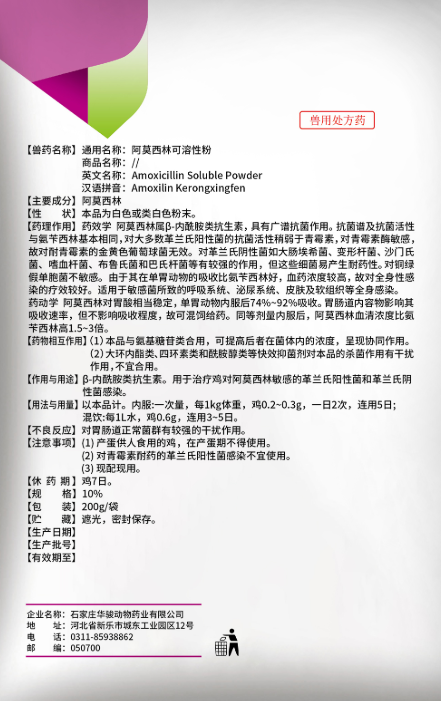
Product Advantages of Amoxicillin for Animals Table
|
Advantages |
Details |
|
Qualified and Effective |
Fully compliant with relevant national standards, capable of passing random inspections. With a classic formula, the product's qualification and effectiveness are guaranteed. |
|
Rapid Effect |
Symptoms can be alleviated within one day of use, and a therapeutic effect can be achieved within 3 - 5 days. |
|
Lasting Efficacy |
Processed by a special technique, it has a longer residence time in the digestive tract, ensuring continuous action. |
|
Cost Reduction |
Using this product leads to a high feed conversion rate, reducing breeding costs and enhancing farming efficiency. |
Basic Mechanism of Action of Amoxicillin for Animals
- Antibiotic Classification and Target: Amoxicillin for animals belongs to the penicillin group of antibiotics and targets the synthesis of the bacterial cell wall. Bacteria rely on their cell wall for structural support and protection, which is made up of peptidoglycan, a complex polymer.
- Interaction with Penicillin - Binding Proteins (PBPs): Amoxicillin specifically targets the enzymes involved in the final stages of peptidoglycan synthesis, namely penicillin - binding proteins (PBPs). When amoxicillin for animals binds to PBPs, it inhibits the cross - linking of peptidoglycan chains.
- Weakening of the Cell Wall: This inhibition weakens the integrity of the bacterial cell wall, making the bacteria unable to maintain their shape and osmotic balance.
- Bacterial Death: Without a stable cell wall, bacteria become vulnerable to osmotic pressure. Water enters the cells, causing them to swell and eventually burst, leading to bacterial death. This bactericidal action enables amoxicillin for animals to be effective against a wide range of gram - positive and some gram - negative bacteria, offering a broad - spectrum solution for bacterial infections in animals.
Amoxicillin for Dogs: Specific Mechanisms and Applications
- Respiratory Tract Infections: In dogs, amoxicillin for dogs is commonly used to combat respiratory tract infections caused by bacteria such as Streptococcus and Pasteurella. It penetrates the infected lung and airway tissues, binds to the PBPs of these bacteria, disrupts cell wall synthesis, halts bacterial multiplication, and relieves symptoms like coughing, sneezing, and breathing difficulties.
- Urinary Tract Infections: For urinary tract infections, often caused by Escherichia coli and other gram - negative bacteria, amoxicillin for dogs is excreted via the kidneys and concentrated in the urine. In the urinary tract, it targets bacteria by interfering with cell wall construction, eliminating the infection and reducing discomfort for the dog.
- Skin and Soft - Tissue Infections: When it comes to skin and soft - tissue infections, amoxicillin reaches the affected areas through the bloodstream. It acts on bacteria causing conditions like abscesses or cellulitis, killing them and facilitating the healing of damaged skin and tissues.
Amoxicillin for Animals FAQS
How does the special process treatment of amoxicillin for animals contribute to its lasting efficacy?
The special process treatment by Shijiazhuang Huajun Animal Pharmaceutical Co., Ltd. modifies the physical and chemical properties of amoxicillin for animals. This modification slows down the drug's absorption, metabolism, and excretion rates from the animal's body. As a result, amoxicillin remains in the digestive tract and bloodstream for a longer time. This extended presence enables continuous targeting of bacteria, increasing the likelihood of completely eradicating the infection. It ensures that even newly growing bacteria or those not initially affected by the initial dose are exposed to the antibiotic over time, enhancing the overall therapeutic effect and reducing the risk of infection recurrence.
Can amoxicillin for dogs and amoxicillin for cats be used interchangeably?
Amoxicillin for dogs and amoxicillin for cats should not be used interchangeably without proper veterinary guidance. Despite having the same basic mechanism of action, there are differences in the appropriate dosage based on the size, weight, and metabolic rate of dogs and cats. Cats are generally more sensitive to medications, and an incorrect dose of amoxicillin formulated for dogs can be harmful to them. Moreover, the types of infections and causative bacteria can vary between the two species. Veterinarians consider these factors when prescribing amoxicillin and may recommend different formulations or dosing regimens for each animal. Thus, wholesalers should educate customers on the importance of following veterinary advice regarding amoxicillin use for different pets.
What are the common signs that indicate amoxicillin for animals is not working?
If amoxicillin for animals is ineffective, several signs may be evident. The animal's symptoms may persist or worsen despite treatment. For example, in respiratory infections, coughing, sneezing, or difficulty breathing may not improve. In cases of skin infections, redness, swelling, or discharge may continue or increase. Additionally, the animal may show signs of discomfort, loss of appetite, or lethargy. If these signs are observed, it is important to consult a veterinarian, as it may indicate the need for a different treatment approach, such as changing the antibiotic or adjusting the dosage.
-
China Veterinary Tiamulin Injection for Livestock Respiratory Health
NewsApr.16,2026
-
Prevention and Control of China Salmonella in Poultry Industry
NewsApr.09,2026
-
China Ivermectin Cattle Dewormer A Comprehensive Guide for Livestock Health
NewsApr.07,2026
-
China Amoxicillin 효능 A Comprehensive Guide to Quality and Sourcing
NewsApr.04,2026
-
Comprehensive Guide to China Salpingitis CT Diagnosis and Treatment
NewsMar.31,2026
-
Comprehensive Guide to China Ivermectin Pellets for Horses and Their Benefits
NewsMar.28,2026