


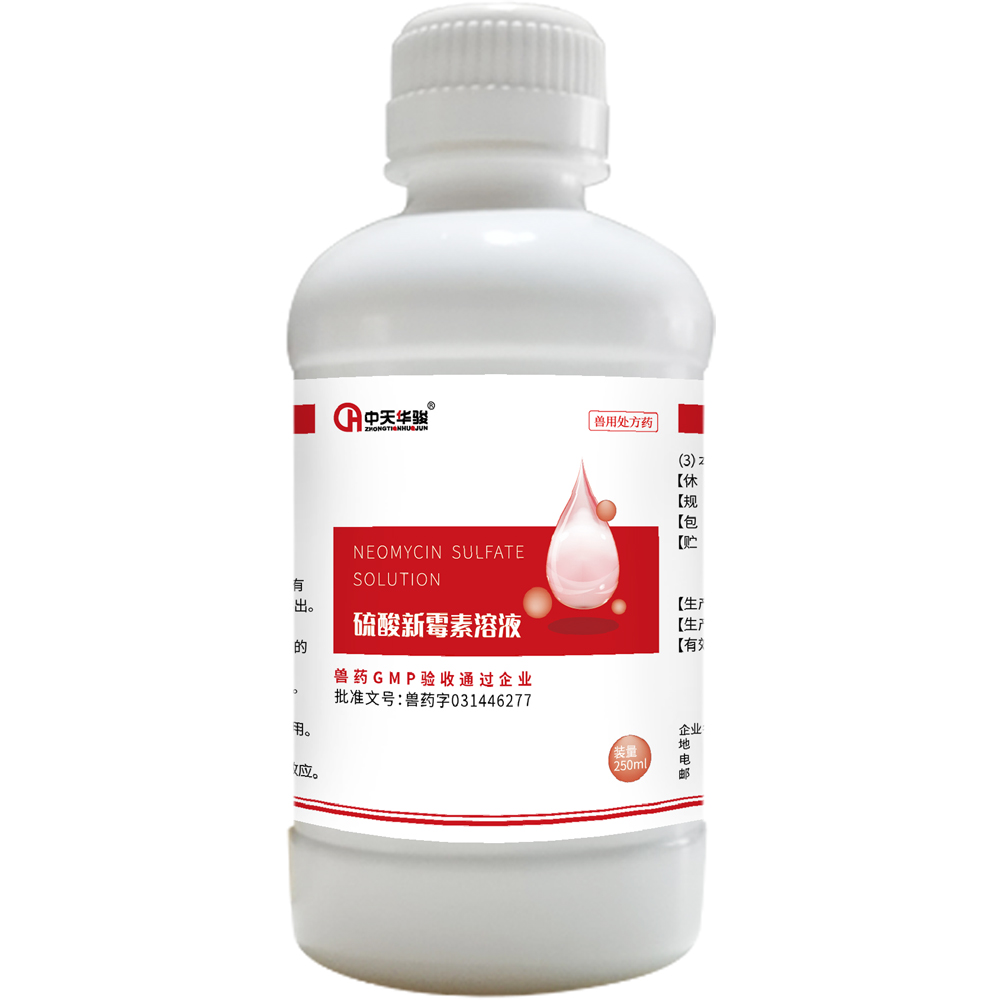
Neomycin Sulfate Solution is a professional-grade antimicrobial agent specifically engineered to combat severe gastrointestinal infections in livestock. By targeting the intestinal tract without being absorbed into the bloodstream, this high-potency solution effectively eliminates harmful bacteria, reducing ammonia levels and preventing critical conditions such as enteritis, enterotoxemia, and hepatic encephalopathy, ensuring the overall stability of animal health.
Designed for maximum efficacy and safety, our Neomycin Sulfate Solution is the ideal choice for livestock producers aiming to optimize feed conversion rates and protect their herds from pathogens like E. coli and Salmonella. By repairing the intestinal mucosa and improving nutrient absorption, this solution not only treats active infections but also restores the digestive environment for long-term productivity and growth.
Detailed Parameters
| Main Ingredient | Neomycin Sulfate | Concentration | 20g (20 million units) per 100ml |
|---|---|---|---|
| Application Method | Oral Administration / Water Mix | Dosage Ratio | 250ml per 600-800L of water |
| Treatment Duration | 3-5 Consecutive Days | Packing Spec | 250ml/bottle × 60 bottles/box |
| Target Pathogens | E. coli, Salmonella, Clostridium | Primary Function | Treatment of Enteritis & Enterotoxemia |
| Product Form | Liquid Solution | Safety Warning | Not for Injection (Nephrotoxic) |
Key Advantages
Pathogen Elimination
Rapidly eliminates intestinal inflammation caused by E. coli and Salmonella to protect livestock health.
Mucosal Repair
Actively repairs the intestinal mucosa and restores a healthy microbial environment for better digestion.
Enhanced Absorption
Improves the efficiency of nutrient absorption, significantly increasing the feed reward ratio.
Ammonia Control
Reduces ammonia levels in the gut, preventing hepatic encephalopathy and systemic toxicity.
Digestive Stability
Prevents digestive issues related to overfeeding and bacterial overgrowth in the small intestine.
Targeted Delivery
Non-absorbable nature ensures the medication stays in the GI tract where it is needed most.
Product Gallery
Management Platforms
Supply Chain Control
Full traceability from raw material synthesis to final packaging for pharmaceutical purity.
Quality Assurance
Strict adherence to veterinary medicine manufacturing standards and potency testing.
Dosage Monitoring
Optimized water-mixing protocols to ensure uniform concentration across the herd.
Pathogen Tracking
Comprehensive analysis of E. coli and Salmonella strains to ensure antimicrobial efficacy.
Inventory Stability
Standardized bulk packaging (60 bottles/box) for efficient warehouse management.
Regulatory Compliance
Compliant with international veterinary pharmaceutical guidelines for raw material usage.
Investment Return Comparison
| Metric | Traditional Treatment | Neomycin Sulfate Solution |
|---|---|---|
| Recovery Rate | Moderate | High / Rapid |
| Feed Conversion | Low due to inflammation | Improved via mucosal repair |
| Pathogen Load | Slow reduction | Rapid elimination |
| Administration Cost | High (Individual dosing) | Low (Water medication) |
| Animal Growth Rate | Stagnant during illness | Accelerated post-recovery |
Frequently Asked Questions
It is primarily used to treat enteritis and enterotoxemia caused by pathogens such as E. coli, Salmonella, and Clostridium, as well as managing issues related to overfeeding.
Neomycin is highly nephrotoxic when injected, meaning it can cause severe kidney damage. It is designed exclusively for oral or water-based administration.
By killing ammonia-producing bacteria in the intestinal tract, it keeps systemic ammonia levels low, which prevents toxicity in the brain.
The recommended dosage is 250ml of solution mixed with 600 to 800 liters of water, administered for a period of 3 to 5 days.
Yes, by repairing the intestinal mucosa and reducing inflammation, it improves digestion and nutrient absorption, which leads to a better feed reward ratio.
Yes, it is frequently used as a preventive measure against bacterial overgrowth and digestive disturbances in high-density livestock environments.